
For most business management firms, switching royalty platforms isn’t a priority—it’s something you avoid until it becomes unavoidable. Not because the current system works well. But because switching means reviewing old contracts, re-entering contract rules, retraining your team, and risking disruption in the middle of already messy workflows. So instead, you keep patching what you have.
But the real cost isn’t switching. It’s the compounding operational drag your team absorbs every time you process royalties.
The Cost of Not Switching Royalty Systems for Business Management Firms
Most firms don’t see the cost of legacy royalty systems or excel spreadsheets directly. But when the system is “good enough,” the cost is easy to miss. It doesn’t show up on an invoice or a line item on the P&L. Instead, it shows up in time, errors, and missed opportunities.
1. Time Cost: Manual Work That Doesn’t Scale
Legacy royalty systems still rely heavily on manual processes.
Teams spend time:
- Reformatting and mapping distributor files that change constantly with new columns and data
- Cleaning metadata errors and inconsistencies before they break downstream calculations
- Reconciling millions of sales lines across disparate sources
- Re-running the same workflows every period because nothing is truly automated
- Manually validating outputs because they don’t fully trust the system
As a result, the majority of your team’s time is spent cleaning and preparing data—not analyzing it. For business management firms, that time directly impacts capacity. Every hour spent on manual processing is an hour that can’t be spent serving clients or optimizing the business.
2. Error Cost: Risk That Impacts Client Trust
Disconnected workflows, excel spreadsheets and third-party payment processors introduce risk at every step.
Manual data handling leads to:
- Client emails asking “Where did this number come from?”
- Internal time spent reviewing calculations to verify outputs
- Delayed payouts while teams double-check results
- Loss of confidence in the reporting itself
Even small errors create downstream consequences. Clients ask more questions, teams spend more time validating results and confidence in reporting decreases. Over time, this shifts your role from trusted operator to reactive explainer.
3. Scale Cost: Growth Limited by Systems
As your firm grows, the complexity of royalty operations increases.
Without the right infrastructure:
- Every new client adds more edge cases
- Every new contract adds more conditional logic
- Every new revenue stream adds more reconciliation work
So instead of scaling cleanly, your team scales through more manual effort, more review cycles, and more dependency on your people. That means workflows slow down and operational bottlenecks become unavoidable. And your royalty management system defines your ceiling – not the other way around.
The Myth of Switching Royalty Management Systems
Many firms delay switching because they expect disruption.
They assume:
- Migration will take too long or will be too complicated
- Existing contract logic won’t be supported and will require workarounds
- Teams will need to learn complicated new workflows
- Short-term inefficiencies will outweigh long-term gains
What most business management firms are actually avoiding isn’t switching tools—it’s exposing how much of the current process relies on manual workarounds, undocumented logic, and institutional knowledge.
How Tone Reduces the Cost of Royalty Operations
1. Faster Sales and Royalty Processing
Tone processes sales files and runs royalties up to 5x faster than traditional systems.
Instead of spending hours preparing data, teams can:
- Standardize and validate sales files automatically
- Reduce manual data management with tools to handle data at scale
- Run royalties and fix errors in hours, not days
As a result, processing royalties becomes faster and more predictable.
2. AI Speeds Up Your Workflow
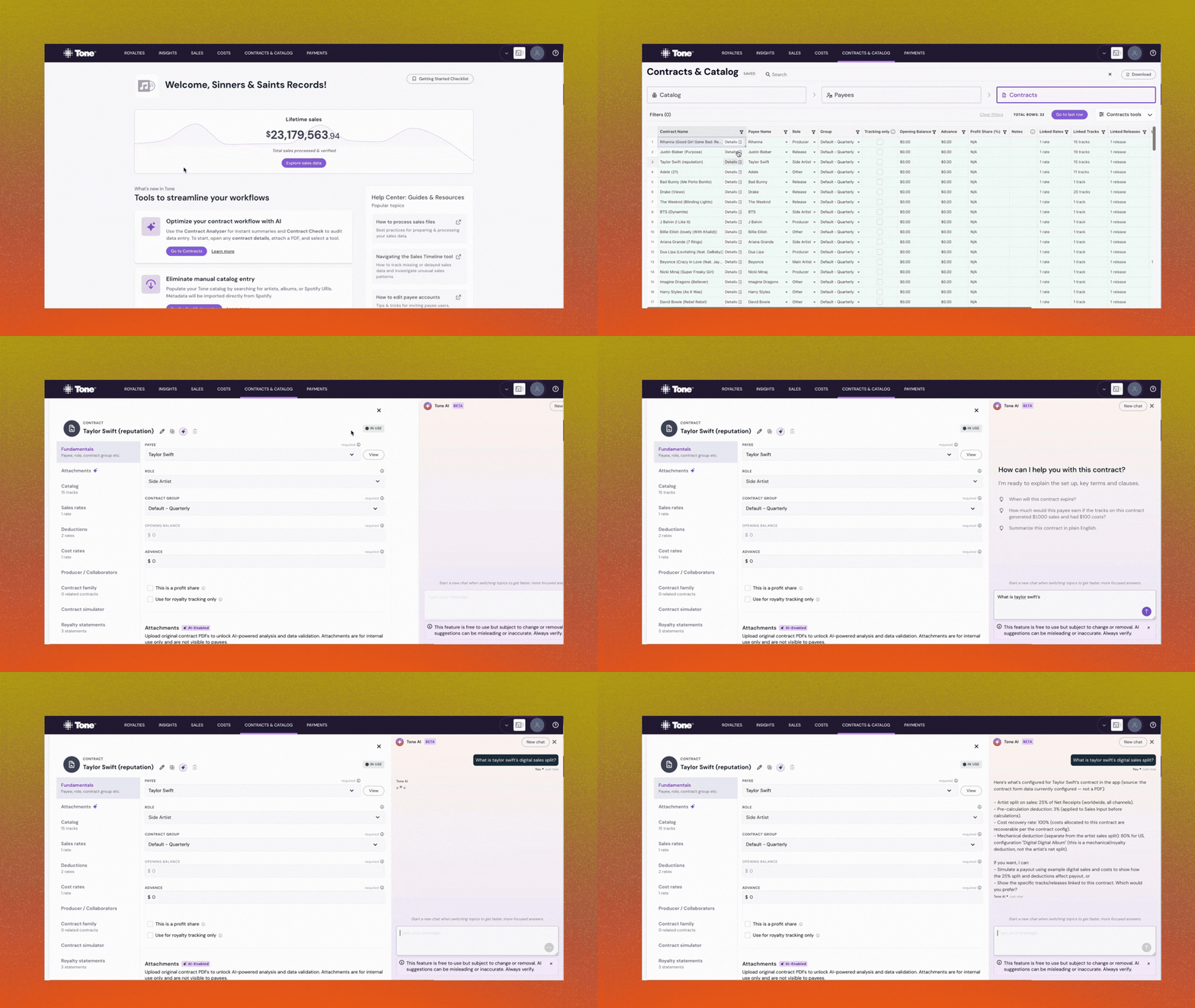
Tone’s AI reduces the amount of manual interpretation and cleanup your team has to do before anything can move forward.
This includes:
- Contract setup and interpretation
- Data validation and error detection
- Identifying inconsistencies before they impact payouts
Instead of spending hours reading hundreds of pages, manually interpreting contracts, and catching issues after the fact, the system helps surface problems earlier—before they impact calculations or payouts.
3. Real-Time Dashboards and Analytics
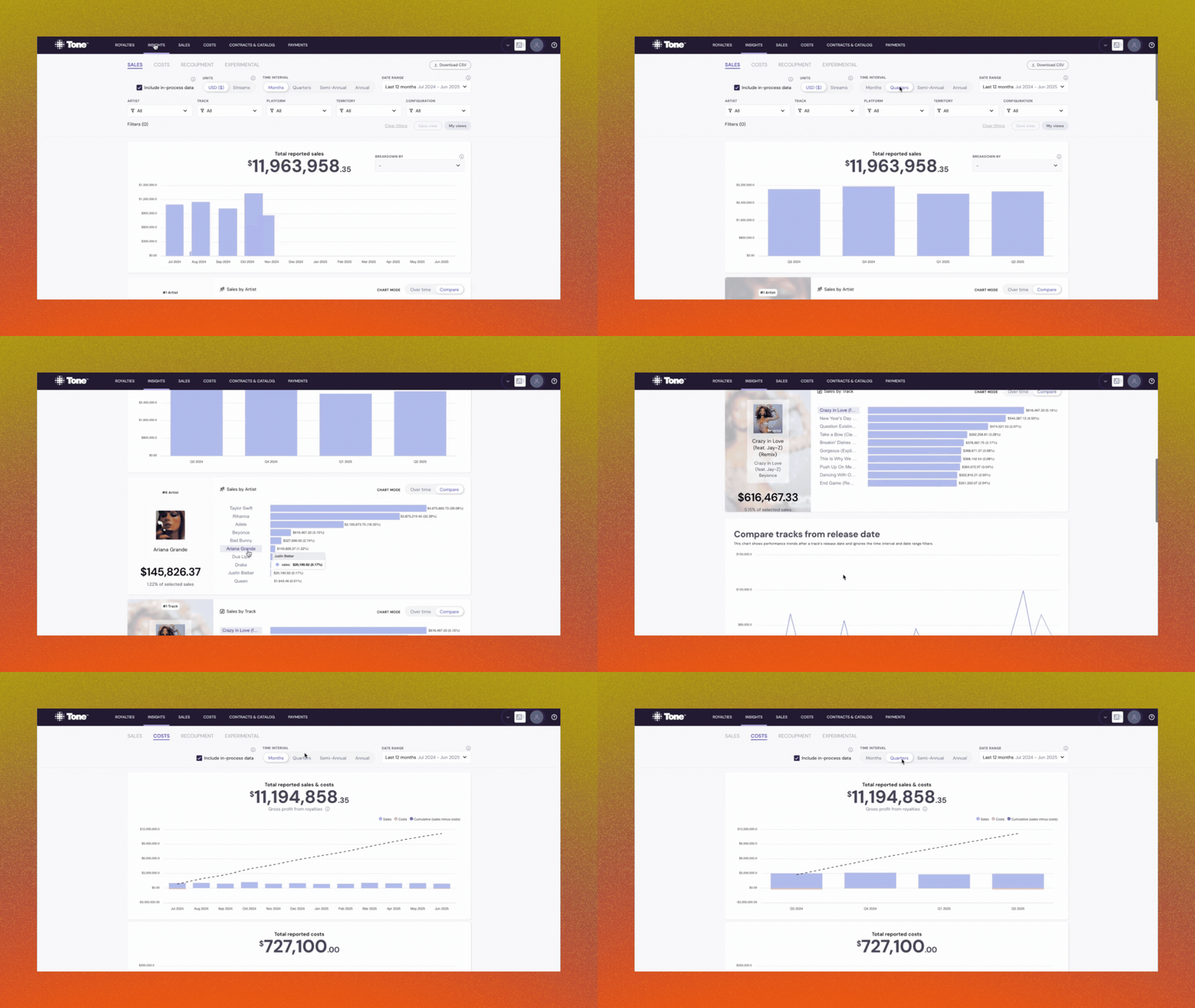
Most royalty systems treat reporting as a separate step. Tone treats it as part of the workflow. Dashboards update as soon as sales data is processed, with additional reporting available as soon as royalty periods are run, providing:
- Real-time visibility into revenue
- Clear, visual reporting for clients
- Insights that are easy to understand across teams
This reduces the need for manual reporting and follow-up questions.
4. Built for Cross-Functional Teams
The data that goes into royalties affects every member of your team, but most royalty platforms keep it siloed within the royalty administration team. When everyone from finance to operations to leadership rely on that data for decisions—siloed information disrupts business.
Tone’s system is designed to be accessible across teams, enabling:
- Shared visibility into contracts and payouts
- Better collaboration between departments
- Faster decision-making
This removes internal bottlenecks and improves alignment.
5. Support That Matches Your Workflow
Support is often overlooked, but it directly impacts efficiency. Because when something breaks in royalties, it doesn’t stay internal—it becomes a client-facing issue.
Tone provides:
- Direct access to support teams
- Faster response times
- Guidance when issues arise
Instead of waiting for answers, teams can resolve issues quickly and keep workflows moving.
The Real ROI of Switching
Switching royalty systems isn’t just a technical decision. It’s an operational one.
When royalty workflows become more controlled and predictable, your firm can:
- Handle more clients without increasing headcount
- Reduce time spent cleaning, reconciling, and validating data
- Improve reporting accuracy and consistency
- Answer client questions faster and with more confidence
The business management firms that are scaling today aren’t the ones working harder to manage royalties. They’re the ones building systems that reduce the need to.
Tone is built for that shift. It’s a system built to remove the manual work, fragmented workflows , and constant validation cycles that slow your teams down.
If your team is spending more time preparing, fixing, and validating royalty data than actually using it, it’s time to rethink the system behind it.